
The New Collector: Why Tangible Assets Are Having a Moment
In an era of digital abundance, the most sophisticated collectors are rediscovering the irreplaceable value of the physical, the finite, and the storied. Tangible assets are having a moment — and it's no accident.
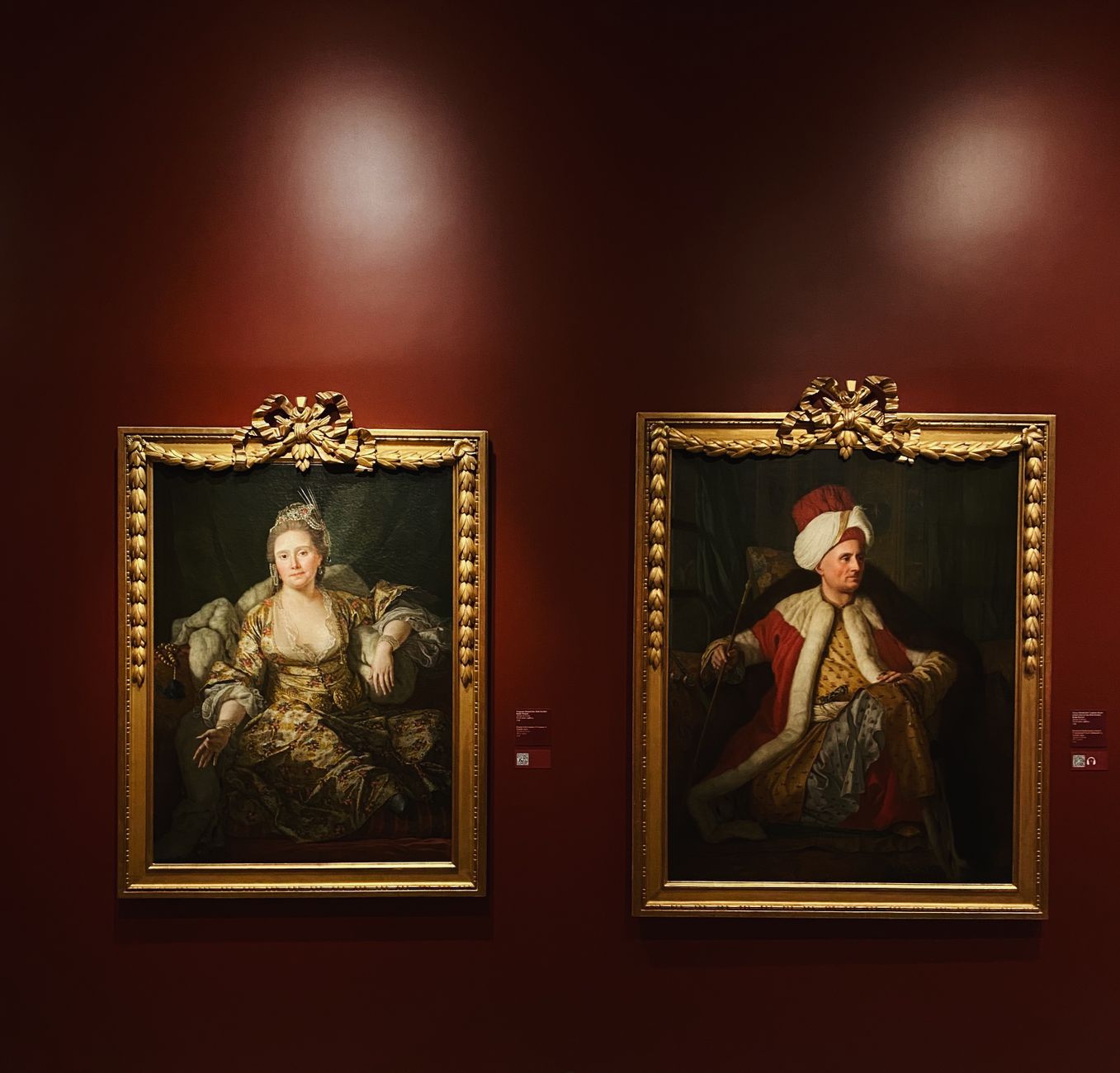
We live, by any reasonable measure, in an age of digital abundance. Content is infinite. Images are free. Music streams on demand. Nearly every piece of information ever recorded is accessible within seconds from a device that fits in a pocket. In this environment, scarcity — genuine, unmanufacturable scarcity — has become one of the most quietly radical conditions a thing can possess.
It is against this backdrop that a quiet but significant shift is taking place among collectors and connoisseurs around the world. The most thoughtful among them are turning, with renewed seriousness, toward the physical. Toward the finite. Toward objects that carry within them the irreproducible marks of real time, real place, real human hands.
Tangible assets — fine art, vintage timepieces, rare antiquities, aged heritage collectibles — are having a moment. And it is no accident.
The Digital Paradox
The digital economy has produced extraordinary things: global communication, instant access to knowledge, entirely new forms of creative expression. But it has also produced a paradox. When everything can be copied with perfect fidelity — when a digital image can be duplicated a billion times without degradation, when a file can exist simultaneously in a thousand places — the concept of authenticity becomes strangely unstable.
The response to this instability has been fascinating to observe. A significant and growing cohort of collectors — not just the traditionally wealthy, but professionals, entrepreneurs, and sophisticated individuals across a range of ages and geographies — has begun to place a premium on precisely the qualities that the digital world cannot replicate: physicality, provenance, rarity, and the weight of time.
Objects that exist in only one place, that bear the marks of their making and their history, that cannot be duplicated because they are defined by specific materials assembled at a specific time by specific hands — these objects carry a credibility that no digital asset can match. They are, in the truest sense, singular. And in an age of infinite copies, singularity is one of the rarest commodities of all.
The Rise of the Passion Asset
The collectibles market has expanded dramatically in recent years, and the range of objects that serious collectors pursue has broadened correspondingly. Where previous generations might have focused narrowly on Old Master paintings or rare postage stamps, today's collectors bring the same level of connoisseurship to vintage watches, antique furniture, rare books, aged wines and cheeses, classic automobiles, and — increasingly — Scottish heritage casks.
What these categories share is not their material form but their underlying characteristics: finite supply, skilled creation, the transformation worked by time, and a provenance that can be documented and traced. The collector who acquires a Patek Philippe reference 2499 from 1955 and the collector who acquires a heritage cask sealed in a Highland warehouse in the same year are drawn by essentially the same impulse: the recognition that certain physical objects become more singular — more wholly and irreversibly themselves — as time passes, and that this singularity has a value that persists beyond trends and fashions.
These are sometimes called "passion assets" — objects chosen not primarily for financial calculation but for the love of what they represent: craft, tradition, rarity, story. The passion is real, but so is the intelligence behind it. Collectors who pursue passion assets tend to be deeply knowledgeable about what they are acquiring. They study provenance, they consult experts, they develop an understanding of the specific factors that distinguish one example from another within their chosen category.
Provenance as the New Currency
In the world of tangible collectibles, provenance has always mattered. But in the current climate, it matters more than ever — and the standards to which collectors hold provenance documentation have risen correspondingly. A painting that comes with a complete exhibition history and a chain of ownership stretching back to the artist's studio commands a premium over an apparently identical work with gaps in its record. A vintage watch with its original box, papers, and service history is valued above a watch without such documentation, even if the watches themselves are indistinguishable.
This premium on provenance reflects something important about what collectors are actually buying. An object without a documented history is just an object — a beautiful one, perhaps, but ultimately anonymous. An object with a full provenance is an entity with an identity: it has a story, a journey, a record of who has valued it and why. That story adds to the object's meaning in a way that cannot be separated from its material form.
Scotland's aged heritage assets are particularly well-suited to this provenance-conscious market. Every cask that rests in a Scottish bonded warehouse has a documented fill date, a recorded source, a traceable custody history. The asset's journey — from the craftspeople who created it, through the decades of its maturation, to the collector who eventually acquires it — can be narrated with precision. This is provenance of the highest order: complete, unambiguous, and supported by the institutional record-keeping traditions of an industry that has been documenting its work for centuries.
The Physical World Reasserts Itself
There is something deeper at work in the turn toward tangible assets than mere market dynamics. It reflects, I think, a genuine human need for the physical — for objects that can be touched, that occupy space, that have weight and texture and smell. The phenomenology of owning something real, something present in the room with you, is fundamentally different from the experience of owning a digital entry in a ledger, however secure that ledger may be.
The collector who visits a Scottish bonded warehouse and stands among the casks that contain their heritage asset is not having an abstract experience. They are in a specific place, surrounded by specific objects, breathing specific air that has been shaped by centuries of craft and geography. The asset they own is real in the most immediate and irreducible sense — it is there, in that warehouse, in that cask, alive with the slow chemistry of maturation, becoming more fully itself with every passing year.
This kind of encounter with the physical world — unmediated, specific, irreplaceable — is something that no digital experience can replicate. And as the digital world expands to fill more and more of our daily experience, the demand for these unmediated encounters with the real grows correspondingly. The most sophisticated collectors understand this instinctively. They are drawn to the physical not in spite of their digital fluency but because of it — because they know better than most what the digital world can and cannot offer.
The Long View
What distinguishes the serious collector from the casual buyer is the willingness to take the long view — to acquire not for immediate gratification but for the deep satisfaction of owning something that improves with time and will be valued by those who come after. This orientation toward the long-term is, in itself, a kind of radicalism in a culture that optimises for the instant.
Heritage casks sealed in Scottish warehouses embody this long-term perspective perfectly. The craftspeople who filled them were thinking in decades, not quarters. The natural processes that transform their contents operate on timescales that make modern business cycles look trivially short. And the collectors who choose to participate in this tradition are, in their own way, aligning themselves with a different kind of time — one measured not by screen-minutes but by seasons, by years, by the slow accumulation of depth and character that only patience can produce.
The new collector is not a nostalgist. They are not retreating from modernity — they are responding intelligently to it. In a world of digital abundance and manufactured rarity, they are pursuing what is genuinely scarce: the physical, the finite, the storied. And in Scotland's ancient bonded warehouses, resting in oak casks shaped by craftspeople who have given their lives to this work, they are finding exactly that.
Tangible assets are having a moment. The moment, it turns out, has been building for centuries.