
Inside Scotland's Bonded Warehouses: Where Time Stands Still
Behind heavy iron doors and thick stone walls, Scotland's bonded warehouses hold secrets that have been maturing for generations. Step inside — time moves differently here.
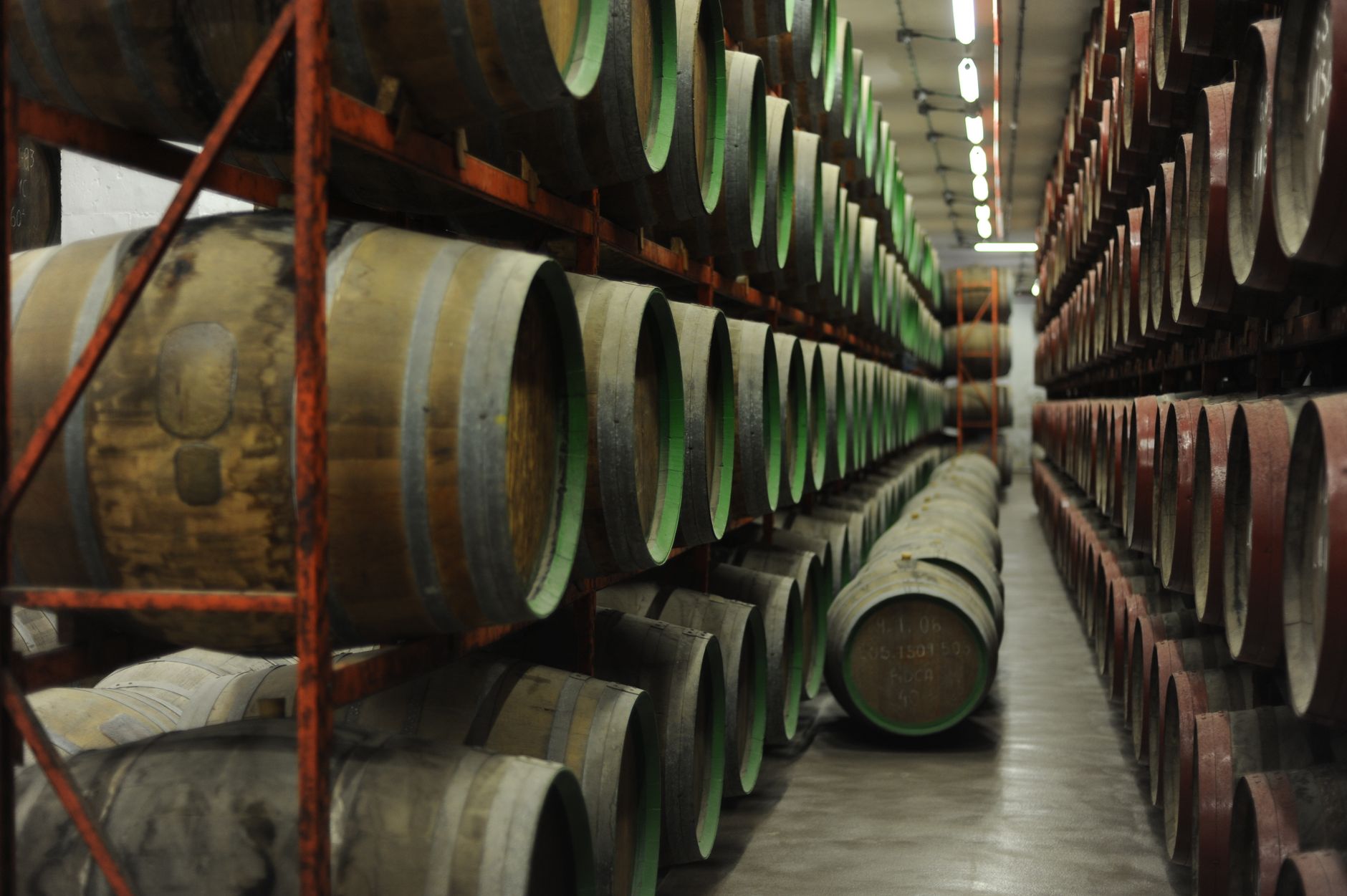
Push open the heavy iron door and the world outside — its noise, its haste, its digital urgency — falls away completely. You are standing inside a Scottish bonded warehouse, and here, time does not move the way it does elsewhere.
The air is cool, thick with a mineral dampness that clings to the walls. Stone, centuries old and dark with moisture, rises around you. The floor is compressed earth, the same earth that has absorbed decades of patience. Rows upon rows of oak casks stretch into the shadows — each one resting, silently, on its journey through time. This is not a storage facility. This is a cathedral of craft.
A History Written in Stone
Scotland's bonded warehouses have changed remarkably little since the 18th century, when the British government recognised that certain aged assets required controlled, secure storage — both to ensure quality and to manage the duty payable upon their eventual release. "Bonded" meant precisely that: assets held under bond, secured, undisturbed, maturing under the watchful eye of both craftsman and crown.
The earliest warehouses were built for permanence. Thick granite and sandstone walls — sometimes more than a metre deep — provide natural insulation, keeping temperatures cool in summer and frost-free in winter. There is no climate control here, no digital thermostat, no modern intervention. Nature regulates the space, as it always has, and as a result, what rests inside is shaped, slowly and irrevocably, by the land itself.
Many of the warehouses that operate today were built in the 1800s. Their beams are original timber, darkened with age. Their roofs let in thin threads of cool Highland air. The casks that rest on their racks were, in many cases, filled before anyone alive today was born. This is heritage in the most literal sense: a physical, living inheritance from craftspeople long gone.
The Angel's Share
Every year, a small percentage of what rests within each oak cask evaporates — drawn upward through the wood's grain and out into the cool Scottish air. The craftspeople who tend these warehouses have long called this the angel's share. It is a beautiful and arresting concept: even as a heritage asset matures and grows more rare, more concentrated, more singular, it gives something back to the sky above it.
In a region like the Scottish Highlands, the angel's share typically runs at around two percent per year. Over decades of maturation, this means that a cask filled to the brim will hold considerably less by the time it is opened — what remains, however, is transformed. Concentrated. Deepened. The very act of loss is also the act of creation.
This evaporation is one of the reasons that longer-aged assets from Scotland command such attention among serious collectors. The longer a cask has rested, the more of its contents have been given to the angels — and the more rare and concentrated what remains has become. Scarcity, in this context, is not manufactured. It is simply the result of time doing its work.
The Silence Inside
There is a particular quality to the silence inside a bonded warehouse that is unlike any other. It is not the absence of sound — outside, the wind moves across the moors, rain taps against the roof, birds call across the hillside. But inside, the stone walls absorb everything. The casks absorb everything. What remains is a stillness so complete it feels earned.
The craftspeople who work in these warehouses often describe the experience in near-spiritual terms. You do not rush inside a bonded warehouse. You slow down. You look at the casks and you feel, viscerally, the weight of time represented there. This one was filled twenty years ago. That one, over there in the shadows, has been resting for thirty-five. The year painted on its head corresponds to a world before smartphones, before the internet, before much of what we now take for granted.
Heritage is not abstract here. It is stacked, in rows, from floor to ceiling.
Preservation Through Patience
What strikes every first-time visitor is how deliberate the pace is. There is nothing to do inside a bonded warehouse except wait — and in that waiting, everything happens. The contents of each cask interact with the wood around them, absorbing compounds from the oak, changing colour, developing complexity, growing into something that could not have existed had the process been rushed.
Modern life tends to resist this kind of patience. We optimise, accelerate, compress. The bonded warehouse offers a counterpoint: a physical embodiment of the idea that some of the finest things in the world require, above all else, time. The craftspeople who tend these stores understand this intuitively. The masters who select which casks to lay down, and for how long, are exercising a kind of foresight that stretches decades into the future.
Scotland's bonded warehouses are, in this sense, not merely storage facilities. They are institutions of heritage, as carefully maintained as any museum — but alive, in a way no museum can quite replicate. The contents are not static. They breathe. They evolve. Every year that passes inside those stone walls writes itself into what rests within the oak.
A Rare Encounter with Unrushed Time
To visit a Scottish bonded warehouse is to step entirely outside the pace of modern life. The stone walls that surround you have stood for two hundred years. The earth beneath your feet has absorbed the patience of generations. The casks that rest in the shadows were tended by craftspeople who are long gone, whose names may be forgotten but whose work continues, undisturbed, in the cool dark.
There is something profoundly moving about that — about the idea that care, applied faithfully enough and long enough, outlives the person who applied it. That what someone made, or tended, or sealed away decades ago is still here, still maturing, still becoming. Scotland's bonded warehouses are among the few places on earth where the past and the present are literally housed together, separated only by the staves of an oak cask and the passage of time.
Time stands still here. And in that stillness, something extraordinary is always happening.